

Will AI Replace Nurses?
How AI Is Already Being Used in Nursing
AI in healthcare can sound futuristic, but many of the tools nurses use today are practical and fairly narrow. Common examples include:
- Documentation: Speech recognition and ambient listening tools can draft notes or pre-fill parts of the electronic health record (EHR) for a nurse to review and sign.
- Patient monitoring: Early-warning systems scan vital signs and lab results and alert staff when a patient's condition may be getting worse, such as possible signs of sepsis.
- Data analysis: Hospitals use predictive tools to forecast admissions, plan staffing, and flag patients at higher risk of readmission.
- Clinical decision support: Built-in prompts can check for drug interactions, remind staff about care protocols, and suggest next steps based on a patient's data.
In each case, the tool produces information. A nurse still decides what that information means for the patient in front of them.
Why Nurses Are Difficult to Replace
The jobs most exposed to AI so far tend to share a few traits: the work happens at a desk, runs on text or data, and can often be done remotely. A 2026 Stanford Digital Economy Lab study found that employment for workers ages 22 to 25 in highly AI-exposed occupations, such as software development and customer service, was 19% below where it would have been had it kept pace with less-exposed peers. The researchers describe these findings as early signals rather than proof of widespread job loss.
Nursing sits at the other end of that spectrum. The work is physical, in person, and built on human judgment, and it combines interpersonal, hands-on, and clinical responsibilities that AI can't perform on its own.
Human Connection
Patients are often scared, in pain, or overwhelmed when they meet their nurse. Nurses build trust, explain what's happening in plain language, and pick up on what a patient isn't saying, like a wince during a routine question or a family member's worry at the bedside. These skills are sometimes called "soft," but they carry real clinical weight. Noticing that a patient seems confused or withdrawn can be the first sign that something is medically wrong, and trust makes it easier for patients to share the details that shape their care.
Hands-On Care
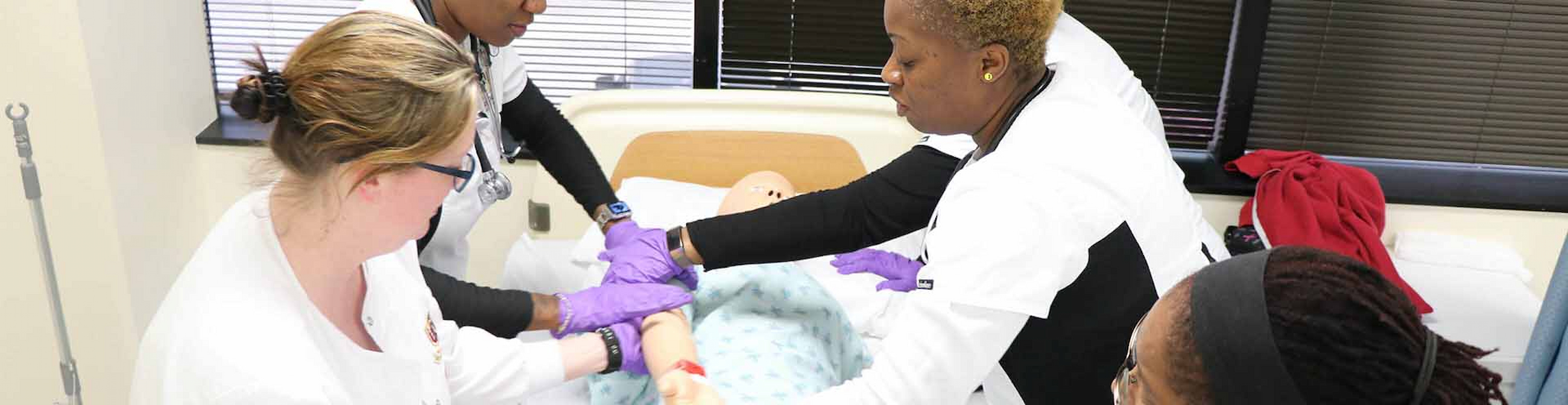
Much of nursing is physical work done in person: taking vital signs, giving medications, caring for wounds, helping patients move safely, and responding when something changes quickly. A monitoring system can flag a drop in a patient's oxygen level. A nurse is the one who repositions the patient, reassures them, and calls for help, often all at once.
Clinical Judgment
AI tools are good at spotting patterns in large amounts of data, but they only see what's in the data. Nurses see the whole person: their history, what they said an hour ago, how they look right now, and what matters to them. When an alert fires, or fails to, the nurse decides whether it fits the situation and what to do next. That kind of judgment in changing, unpredictable conditions is hard to hand off to software.
Licensure and Accountability
Nursing is a licensed profession. As the National Council of State Boards of Nursing (NCSBN) explains, state boards of nursing regulate nursing practice. Each state's nurse practice act defines what nurses can do and who is allowed to do it. To earn a license, candidates complete an approved nursing program and then pass the NCLEX, the national licensing exam. A license also makes a nurse accountable for the care they provide. Software can support that work, but it can't hold a license or take responsibility for a patient.
How AI Could Help Nurses, Not Replace Them
Paperwork is one of the most common frustrations in nursing. The U.S. Surgeon General's 2022 advisory on health worker burnout reported that nurses spend up to 41% of their time on the EHR and documentation. That's time away from patients, and heavy administrative work is a known contributor to burnout.
This is where AI shows the most promise. If tools can draft notes, organize data, and handle routine tasks like scheduling, nurses may get more of their shift back for direct patient care.
Some parts of the job stay with the nurse, though. Patient advocacy is one of them. Nurses speak up when a treatment plan doesn't fit a patient's wishes, when something seems off, or when a patient needs more support than they're getting. That depends on the relationship a nurse builds and their willingness to act on it. AI can surface information that helps, but advocating for a patient remains a nurse's responsibility.
What Nurses Need to Know About Working With AI
Working alongside AI is becoming part of everyday nursing practice. New nurses can expect to use AI-enabled features built into EHRs, monitoring systems, and other hospital technology, and to learn their employer's specific tools on the job.
- The most useful skill here is critical evaluation. This means knowing when to trust what a tool tells you and when to question it. That matters because AI in healthcare comes with real limitations:
- Overreliance: Leaning too heavily on alerts or suggestions can dull the careful assessment skills that catch problems early.
- Privacy: AI tools often work with sensitive patient data, so protecting privacy and following security rules is essential.
- Bias: AI systems learn from historical data. If that data reflects gaps or inequities in care, a tool's recommendations can reflect them too.
- Human oversight: AI can be wrong, sometimes confidently. A qualified professional has to review its output before it affects a patient.
These limitations don't mean healthcare should avoid AI. They're a reminder that it still needs well-trained nurses who understand both the patient and the technology.
Will Nurses Be in Demand in the Future?
Yes, nurses are expected to remain in demand.
According to the BLS, employment of registered nurses is projected to grow 6% from 2025 to 2035, faster than the average for all occupations, with about 180,800 openings each year on average. Employment of LPNs/LVNs is projected to grow 3% over the same period, about as fast as the average, with about 51,800 openings each year.
Several factors drive that demand:
- An aging population with growing healthcare needs
- More patients living with chronic conditions such as diabetes and obesity
- Openings created as nurses retire or move into other roles
- Continued need for care in hospitals, outpatient centers, residential care facilities, and patients' homes
While many statistics focus on RNs, practical nursing is some of the most hands-on work in healthcare. LPNs often provide bedside care such as checking vital signs, helping patients with daily activities, and, depending on state scope of practice, giving medications, especially in long-term care and home health settings. For LPNs who want to take on a broader role over time, an LPN to RN Bridge program offers a path to becoming a registered nurse. Learn more in A Closer Look at the LPN-to-RN Bridge Program.
AI will likely keep changing how nurses do their work, but current projections still point to a steady need for qualified nurses who provide direct patient care for many years to come.
Frequently Asked Questions
-
Will AI replace nurses and doctors?
AI is unlikely to replace either. Doctors use AI to help read imaging and summarize patient records, and nurses use it for monitoring and documentation. In both roles, diagnosing and treating patients still requires a licensed professional who can examine the patient, weigh competing information, and answer for the decision.
-
Where will nursing be in 10 years?
No one can predict the next decade precisely, but current trends point to nurses working with more AI-enabled tools for documentation, monitoring, and planning. Caring for patients and making decisions about their care is expected to remain central to the nurse's role.
-
Will nurses need additional training to use AI?
Most nurses learn the specific AI-enabled systems their employer uses through on-the-job training, so you don't need to become an AI technology expert. Strong foundational nursing skills, sound clinical judgment, and the ability to evaluate technology-assisted information matter most.
Find Your Campus
Nursing is a career for today, tomorrow, and always. Jersey College offers practical and professional nursing programs at campuses across several states. Find a campus near you to see which programs are available and take the next step toward your nursing career.
- New Jersey
- Ewing
- Professional Nursing (ADN): LPN to RN Bridge
- Practical Nursing (PN): LPN Program
- Teterboro
- Professional Nursing (ADN): LPN to RN Bridge
- Practical Nursing (PN): LPN Program
- Ewing