



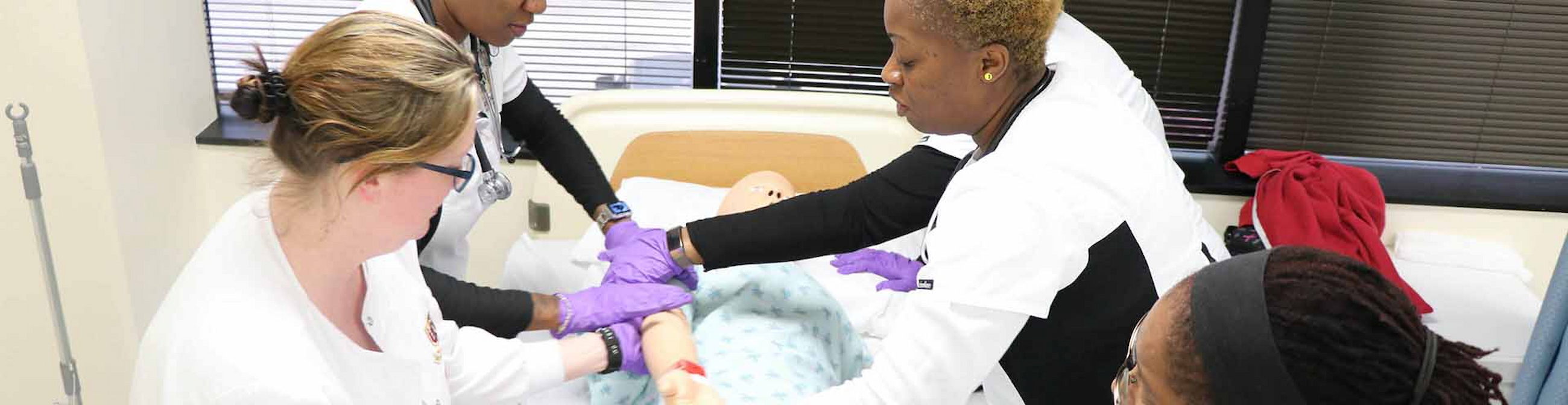
Top Tips to Become a Nurse Anesthetist
What Does a Nurse Anesthetist Actually Do?
Certified Registered Nurse Anesthetists (CRNAs) are advanced practice registered nurses who administer anesthesia and provide anesthesia-related care across a wide range of medical settings.
In practice, CRNAs work before, during, and after surgical and procedural care, assessing patients, developing anesthesia plans, monitoring responses, and managing pain. They're found in hospitals, surgical centers, obstetric units, trauma settings, and military or rural care environments where independent practice is especially valued.
| Category | Overview |
|---|---|
|
Salary Range |
Average Annual salary for CRNAs is approximately $248,320, with top earners exceeding $339,000 depending on setting and location. |
|
Job Demand |
The Bureau of Labor Statistics projects strong growth for nurse anesthetists, driven by demand for surgical and procedural care across an aging population. |
|
Work Style |
CRNAs work in high-focus clinical environments, often in operating rooms, procedural suites, or delivery units, with shifts that can be long and unpredictable. |
|
Patient Interaction |
Patient contact is typically brief and procedural, CRNAs assess patients before anesthesia, monitor them during procedures, and follow up in recovery. |
How to Prepare for Nurse Anesthesia School
There's no single checklist that guarantees admission to a nurse anesthesia program. Programs differ in their specific requirements, but these are the areas most applicants prioritize when preparing their application.
Education Foundations
Science coursework in anatomy, physiology, and pharmacology is frequently noted as relevant preparation. If your undergraduate record has gaps, some applicants explore additional coursework before applying.
Gaining Hands-On Experience
ICU experience is the hands-on background most commonly associated with strong nurse anesthesia applications. Most applicants spend time in critical care before applying, building exposure to high-acuity patients and complex monitoring. What counts as sufficient varies by program, so it's worth researching what individual schools look for.
Credentials and Certification
RN licensure is required across the board. CCRN certification is widely expected, but always verify requirements directly with the programs you're considering.
Application Readiness
Letters of recommendation, a personal statement, and documented shadowing experience are the components most frequently mentioned beyond transcripts and clinical hours. Shadowing a CRNA in particular is something many programs look for, and useful for your own discernment.
Networking and Professional Development
AANA membership is one of the most practical ways to start building connections in the nurse anesthesia field. Informational interviews with practicing CRNAs or SRNA students can add practical insight and the occasional mentorship connection.
How long does it take to become a nurse anesthetist
Program lengths vary, but most doctoral-level CRNA programs span roughly three years including clinical rotations. For most applicants, that follows two to five years of ICU experience on top of the four years to earn a BSN, meaning the full journey often spans a decade or more.
The path typically includes:
- RN licensure in the state where you plan to work or train
- Critical care experience, typically measured in years, with emphasis on high-acuity settings
- Graduate-level coursework or testing such as the GRE (requirements vary by program)
- National certification exams following program completion, including the NCE administered through the NBCRNA
For the most accurate and current information, go directly to AANA, NBCRNA, individual program websites, and Jersey College's own programs where applicable. Requirements evolve, so always verify before making decisions.
Is This Role Right for You?
Nurse anesthesia demands a specific kind of clinical mindset, and it's worth reflecting on whether this role aligns with who you are.
A few questions worth sitting with:
- Do you thrive in high-pressure clinical environments where decisions need to be made quickly and confidently?
- Are you drawn to a role that combines technical precision with direct, hands-on patient care?
- Do you find yourself energized by complex cases rather than overwhelmed by them?
- Are you comfortable with a high degree of accountability, both independently and as part of a care team?
- Do you have, or are you actively building, a strong foundation in critical care nursing?
- Is the length and intensity of the educational commitment something you're prepared to take on?
If several of these resonate, it may be worth exploring further.
Common Next Steps
If you're thinking about building toward a career in nurse anesthesia, here are a few practical ways to move forward from where you are right now.
- Speak with a working CRNA. An informational conversation with someone already in the field can give you a grounded, realistic perspective that no article can fully replicate.
- Request program information from schools you're interested in, including Jersey College, to understand what their specific programs offer and what they look for in applicants.
- Assess your current ICU experience. Evaluate where your clinical background stands and consider what environments might help you build the acuity that programs value.
- Explore relevant certifications like the CCRN to strengthen your professional profile over time.
- Connect with AANA and explore their resources for nurses interested in anesthesia practice.
- Start a shadowing conversation. If you haven't yet observed a CRNA in practice, reaching out to arrange shadowing is a meaningful early step.
Paths vary. Wherever you're starting from, there are ways to build, explore, and get clearer on whether this direction is right for you.
Take the Next Step with Jersey College
If you're building toward an advanced nursing career, Jersey College offers programs designed to support you at every stage, from foundational skills to clinical readiness. Learn more about what we offer at the practical nursing and associate degree levels, and how our offerings can fit into your goals.
FAQs
-
What is the difference between a CRNA and an anesthesiologist?
Both deliver anesthesia care, but from different educational backgrounds. Anesthesiologists are physicians; CRNAs are advanced practice registered nurses with graduate-level anesthesia training. In many settings, particularly rural or underserved areas, CRNAs practice independently. Scope of practice requirements vary by state.
-
How much do nurse anesthetists make?
CRNAs are among the highest-earning advanced practice nurses, though compensation varies by location, setting, and experience. For current figures, the U.S. Bureau of Labor Statistics and AANA are reliable sources.
-
Is becoming a nurse anesthetist worth it?
For nurses drawn to critical care and advanced practice, many find it deeply rewarding, but it comes with a significant educational and professional commitment. Speaking with practicing CRNAs is one of the most useful ways to form your own answer.
Find Your Campus
Based on the success of our programs, we have grown to serve communities in 7 states (and counting!). Find a campus near you to start your NurseLife.
- New Jersey
- Ewing
- Professional Nursing (ADN): LPN to RN Bridge
- Practical Nursing (PN): LPN Program
- Teterboro
- Professional Nursing (ADN): LPN to RN Bridge
- Practical Nursing (PN): LPN Program
- Ewing